
Cardiff misted double glazing: what it means and what it costs
Misted double glazing behaves slightly differently here than it does on newer estates. Edwardian and Victorian bay-fronted houses in Cathays and Roath, 1930s semis in Llanishen, modern builds in Pontprennau means deeper reveals and older fixings, so what looks like a serious fault often turns out to be adjustment. We cover CF10 and CF11 and CF14 and CF23 and CF24 and CF5 on a regular run via A48, so a diagnostic visit rarely sits in the diary long.
What actually causes it
- 1the perimeter edge seal has perished, letting moist air into the cavity
- 2the desiccant in the spacer bar has saturated and can no longer absorb the moisture
- 3units bedded without drainage so rainwater sits against the seal in the rebate
- 4south-facing glass going through daily heat cycles that pump the seal open over years
What we check on survey
- we check whether the bead is internal or external, because external beading changes the fitting method
- we note the spacer depth so the replacement unit sits at the right thickness in the rebate
- we look for standing water in the drainage slots, the usual reason a unit failed early
- we test the hinges and locks while we're there so you know whether the frame has life left
How it's priced
Cost tracks glass area, whether the unit is toughened (needed near doors and low-level glazing), and whether it's obscure or leaded. Small landing windows sit at the bottom of the range, a wide bay unit with toughened safety glass at the top. We measure and quote per opening rather than a blanket price.
How urgent is it? Not an emergency. A misted unit is ugly and slightly less efficient, but it isn't a security or water-ingress risk — most people live with it until they're ready to do several in one visit.
Stopping it coming back
- keep the drainage slots along the bottom of the frame clear of paint and cobwebs
- don't wedge the sash open against a strong wind — it strains the corner welds and the seal
- wipe down condensation on the inside face in winter rather than letting it pool on the bead
Why this comes up in Cardiff
- Council
- Cardiff
- Postcodes
- CF10, CF11, CF14, CF23, CF24, CF5
- Main route
- A48
- Nearest town
- Penarth (4 mi)
Around Cyncoed, Llanishen, Roath the recurring local factors are heritage-friendly frame profiles in conservation streets; traffic noise on the A48 ring; single-glazed bays losing heat in tall Victorian rooms. Commercial neighbours such as Cardiff Bay, Capital Business Park and the Llanishen industrial belt change the exposure again on the elevations that face them, and the Cardiff Council area sets the standards any replacement work is signed off against.
- Cyncoed
- Llanishen
- Roath
- Cathays
- Penylan
- Whitchurch
- Pontprennau
- Rhiwbina
- Heath
- Grangetown
- Splott
- Canton
- Llandaff
- Radyr
- Gabalfa
- Ely
- Adamsdown
What we typically find on survey
- The middle mullion sags visibly across the top rail on any window wider than 1.6m.
- The composite slab has swelled by 2mm on the hinge stile from years of morning-sun exposure.
- The window opens fine on a cold morning and binds by 3pm on a hot afternoon — classic thermal-expansion bind.
- Wet-set fixings through the outer frame have rusted and stained the surrounding brick.
- The multipoint deadbolt still throws but the top hook has stopped catching and no one has noticed for months.
- The letter plate cover has snapped off and the exposed brush strip has flattened over the years.
How we actually carry out the work
- The frame square is checked at the diagonals before any glass goes in — a square frame stays square.
- The frame drainage caps are proven flowing before the beading goes in — a bottle of water down the outer chamber.
- Foam gets a wet finger dressed into the internal reveal, not a dry-cut strip that pulls back later.
- The threshold sealant runs the full width with a single tool pass, not stitched together in inches.
- The internal cill is scribed to the reveal, not just butted and caulked over the gap.
- The lock cylinder is measured to sit flush with the escutcheon plate — a proud cylinder is a snap risk.
Your realistic options
The frame, hinges and handles stay. We template the failed unit, order the glass to size and swap it in about 20 minutes per opening once the glass arrives.
If the frame is sound it's a sensible moment to move to a warm-edge spacer, argon fill and a low-E soft coat, so the replacement performs better than the original ever did.
Only worth it if the frame is also failing — welded corners opening, sashes dropped, or the profile so old that matching glazing beads no longer exist.
Misting on its own is a glass problem, not a window problem. If the frame closes cleanly, locks properly and the gaskets are still supple, replacing the sealed unit is the honest answer and we'll say so. Replacement of the whole window only stacks up when several openings have failed at once and the frames are into their third decade.
What you'll notice first
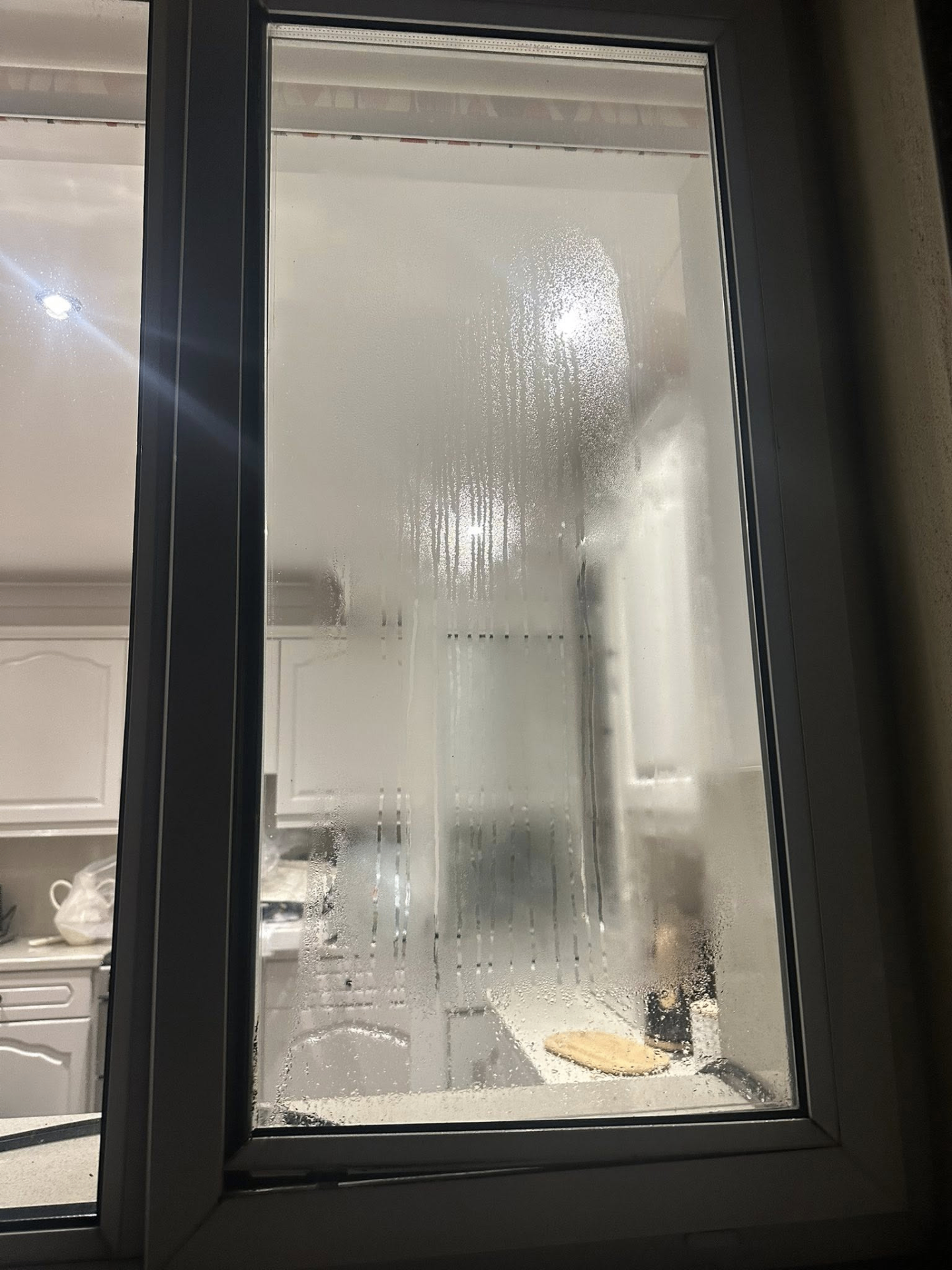
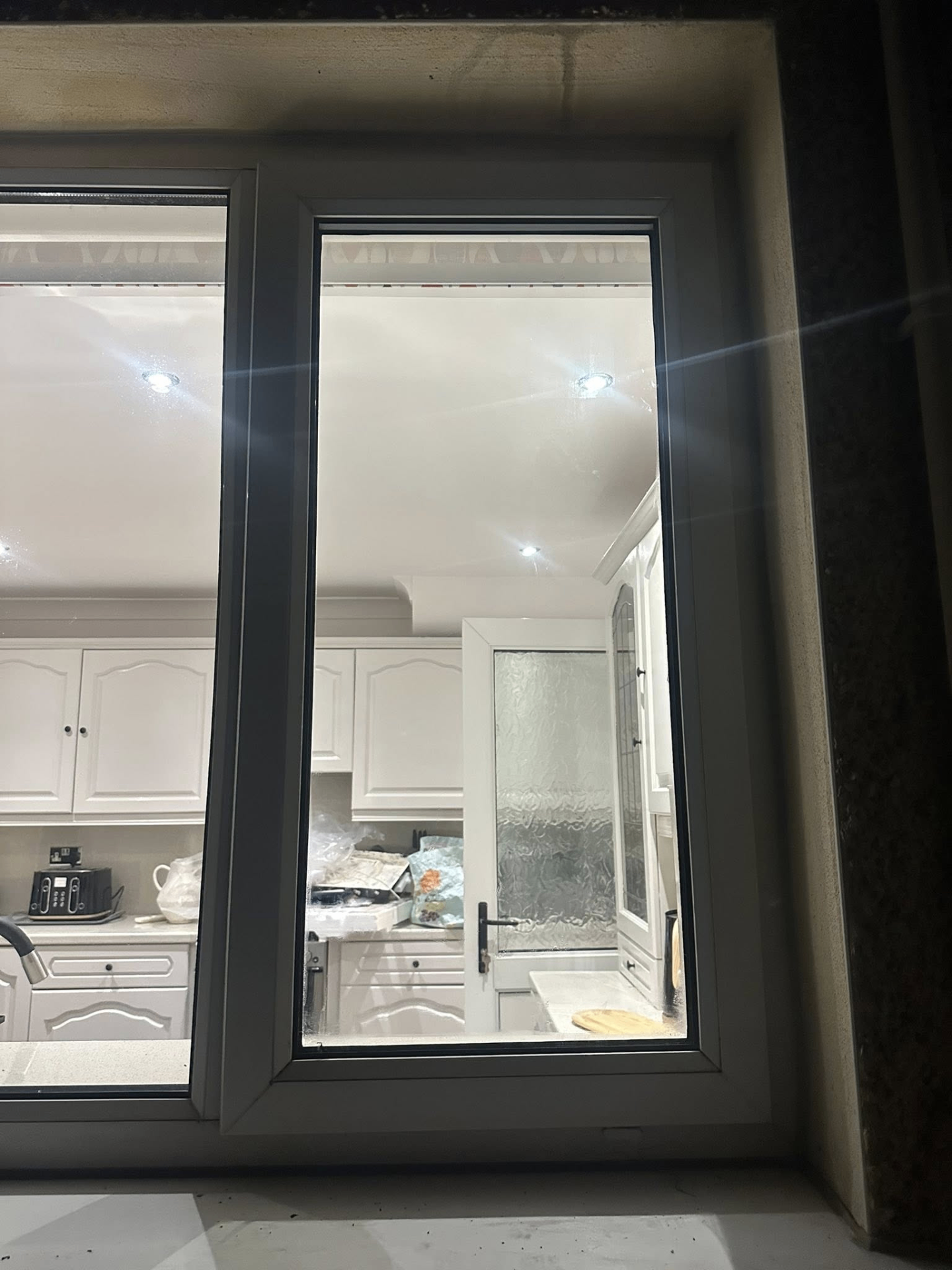
- a permanent haze or milky film between the two panes that a cloth can't reach
- water droplets or tide-marks sitting inside the cavity after cold nights
- a rainbow-ish smear across the glass in low winter sun
- one pane feeling noticeably colder to the palm than the same pane next door
Misted Double Glazing — questions we get asked
Can misted double glazing be fixed without replacing the glass?
No. The drilling-and-drying services you'll see advertised remove the visible fog for a while but the cavity is no longer sealed, so it comes back and the unit loses its gas fill permanently. Replacing the sealed unit is the only durable fix.
Do you have to take the whole window out?
No. The glazing beads come off, the failed unit lifts out, the new one goes in on packers and the beads clip back. The frame never leaves the wall.
How long does the replacement glass take to arrive?
Standard clear toughened units are usually the quickest; obscure patterns, leaded designs and anything oversized take longer because they're made to order. We give you the lead time in writing with the quote.
How quickly can someone look at it in Cardiff?
We run the A48 corridor regularly, so a survey in Cardiff is usually available within the week and the written quote follows within 24 hours of the visit.
Is misted double glazing more common on Cardiff properties?
It's shaped by the local stock. With Edwardian and Victorian bay-fronted houses in Cathays and Roath, 1930s semis in Llanishen, modern builds in Pontprennau, plus heritage-friendly frame profiles in conservation streets and traffic noise on the A48 ring and single-glazed bays losing heat in tall Victorian rooms, the components involved in this fault tend to age faster here than on sheltered inland new-builds.
If replacement is the answer
Other faults we see in Cardiff
Most of the heat leaves through the roof and the frames, so that's where the money should go first.
ReadA door that needs lifting, shoving or a second attempt to lock is warning you before the gearbox fails completely.
ReadYellowing is cosmetic and treatable; splits at the welded corners are structural and aren't.
ReadFull background on misted double glazing
The main guide covers the mechanics of this fault in more depth, without the Cardiff context.
Read the Misted Double Glazing guide →Let's make your house feel more like home.
Fill in a few details and we'll come back within 24 hours with a clear quote — no callout fee, no pressure.