
uPVC Windows on a coastal seaside home in Barry
The reason Barry homeowners with a coastal seaside home search for uPVC windows specifically — rather than just "windows" or "doors" — is that spec choice actually matters here. Seafront UV fading dark PVC foil on south-facing frames is the usual driver. Our route runs CF62 / CF63 weekly, so a survey rarely sits in the diary more than a week. Terrace kerbs are usually granite and unforgiving — the crew boards from the van to the door to protect finished doors. Bay ceiling boxing hides century-old cabling; we test before drilling through the head of the frame. Coastal render is often painted in bright colours that mask sealant discolouration — colour matching at the frame perimeter matters. 10-year product guarantee, 2-year fit warranty, lifetime hardware servicing. Original bay leaded-light casements are worth an offer — restorers pay reasonable money for intact panels rather than skip them. Slate roofs above the front elevation shed water tight to the frame head; a lead flashing detail rarely needs replacement, just re-dressing. Estate roof pitches shed water clear of the head of the frame — lead flashing renewal is rarely required. South-facing seafront elevations fade dark PVC foil visibly within 8–10 years; lighter foils hold their colour twice as long. Chimney breasts eat a foot of internal width on both sides — bay window quotes account for it in the survey. The porch canopy fixings are usually one bolt into masonry and one into the fascia — we test both before removing the old door.
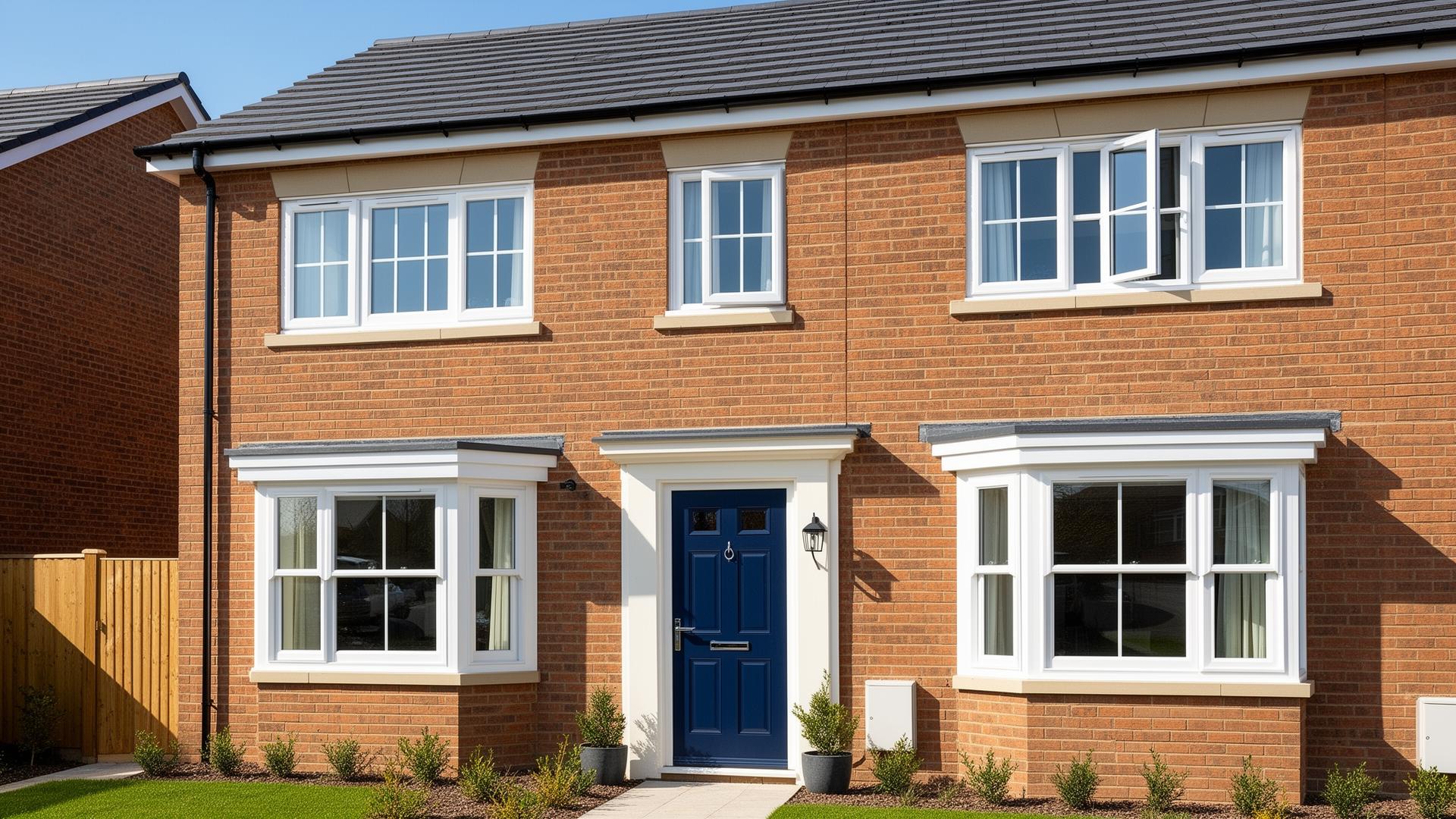
Common coastal seaside homes problems we quote uPVC windows for
- 1Salt corrosion on cheap chrome hardware within 2–3 years.
- 2Seafront UV fading dark PVC foil on south-facing frames.
- 3Wind-driven rain finding gaps in aged sealant.
Reveal and install detail
- → Sealant perimeter matters more than usual — wind-driven rain finds every gap.
- → Hardware finish should be marine-grade stainless, not chrome or brass.
Method: old frames removed cleanly, new units sat on hardwood packers, expanding foam plus internal trims for a draught-tight seal.
Guarantee: 10-year product guarantee, 2-year fit warranty, lifetime hardware servicing.
Our uPVC windows spec for a coastal seaside home
Light foil colours (white, cream, chartwell) hold their finish better than dark foils under seafront UV. Hardware is upgraded to stainless as a spec-level default, not an add-on. In Barry we see this on the seaside Edwardian terraces near the Island, post-war semis in Cadoxton, modern Highlight Park estates around Barry Island, Cadoxton, Gibbonsdown, usually paired with salt-laden coastal air corroding cheap aluminium and hinges; wind-driven rain off the Bristol Channel; seafront UV fading on south-facing PVC on the same elevation. A4055 coast road brings us in cleanly — we time jobs around school traffic on the A4226. Council area is Vale of Glamorgan Council in Vale of Glamorgan; commercial neighbours include Cardiff Airport Business Park and the Atlantic Trading Estate. Nearby: Penarth 5mi, Cardiff 9mi, Cowbridge 7mi. Local vibe: coastal town with two sides — the Island and seafront, and the residential bowl above it.
Local context — Barry
- Council
- Vale of Glamorgan
- Postcodes
- CF62, CF63
- Main route
- A4226
- Nearest town
- Penarth (5 mi)
Neighbourhoods we cover: Cadoxton, Barry Island, Rhoose, Wenvoe, Dinas Powys, Llancarfan. A4055 coast road brings us in cleanly — we time jobs around school traffic on the A4226.
Who's asking
Coastal downsizers, holiday-let operators near the seafront, and long-time owners replacing frames that have taken decades of salt.
In Barry specifically that reads as coastal downsizers, families in the newer estates, holiday-let owners near the Island. The recurring driver for a uPVC windows enquiry is: Owners fixing corroded hardware and heat loss on seafront elevations without needing a full frame swap on inland ones.
What we typically find on survey
- ·One kitchen unit has a defrost trace across the low-e coating — the argon fill has been gone a while.
- ·The old aluminium sliding door has a cracked head roller that pulls the door out of parallel with the frame.
- ·A weep vent that was factory-drilled has been over-painted three times and no longer clears water from the chamber.
- ·The window opens fine on a cold morning and binds by 3pm on a hot afternoon — classic thermal-expansion bind.
- ·There is a permanent green algal streak below the sill where water is bypassing the drip groove.
- ·One sash sits proud of the frame by 2mm along the top rail — a factory manufacturing tolerance that never got addressed.
- ·A previous fitter left the transport wedges in the frame corners and the internal seal never fully reset.
- ·The frame colour has gone chalky on the sun side and stayed factory white on the shaded elevation.
- ·The catch keep for the bathroom window has been packed out with a folded matchbox to make the sash lock.
- ·The frame reinforcement steel inside the outer frame has begun to rust and stain the internal white finish.
- ·The sealed unit is a 20mm gap, not the modern 28mm minimum, so U-values are into the mid-2s at best.
- ·The composite door skin has a UV bloom on the south-facing elevation that no longer matches the colour on the shaded elevation.
- ·A previous cylinder swap left the escutcheon plate rotating freely — a snap risk that nobody logged.
- ·A cat flap has been cut through the lower panel of the back door, weakening the panel and voiding warranty.
- ·The mid-rail on the composite door is bowed outward at the middle by 2mm — a slab-warp symptom.
- ·The composite front door skin has a shallow dent from a delivery bike handlebar and it has ovalised the door.
- ·A previous fitter foam-filled the reveal gap directly against the frame, and the foam has now pushed the jamb inward.
- ·A previous fitter drilled through the outer frame chamber for the trickle vent — never fully sealed the drilling.
- ·The cill end-cap has fallen off and the cill chamber is now a home for insects.
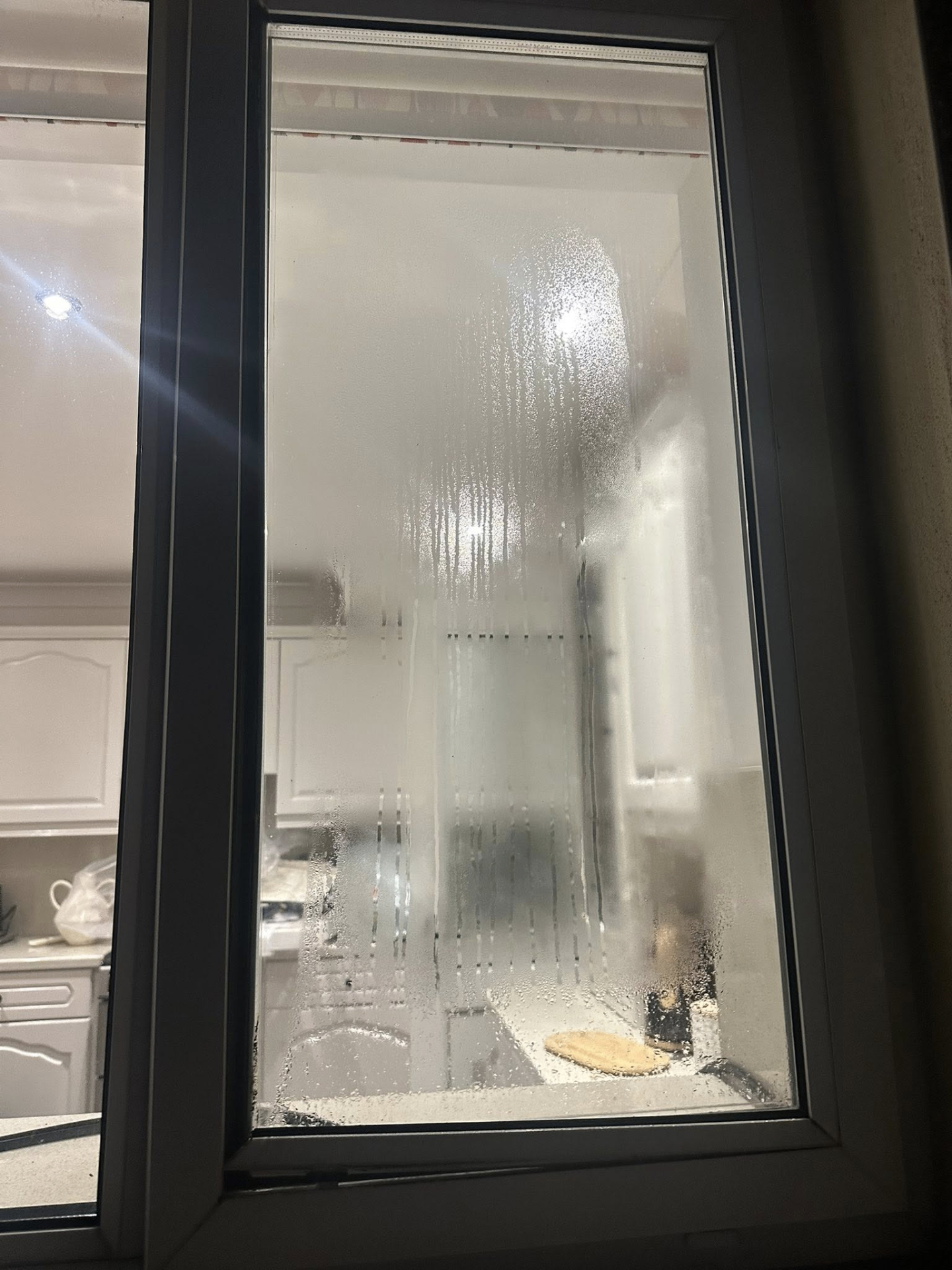
- ·Condensation runs down the inside of every north-facing pane between October and March.
- ·The stay arm on the top vent has bent and no longer sits into its rest bracket cleanly.
- ·The multipoint keeps have worn a shallow groove where the hooks now catch — closing needs a lift-and-pull.
- ·The frame drainage on a south-facing bathroom window is blocked with paint film from the exterior repaint.
- ·The multipoint lock still throws but the internal handle has 40° of dead travel before engaging.
- ·The old timber sub-frame under the current uPVC unit is still in place and is soft at the bottom left corner.
- ·The porch canopy has been leaking directly onto the top of the door for years — the top edge of the slab is soft.
- ·There is a live crack running from the top corner of a bay-window pane where the frame has been out of square since installation.
- ·One handle turns freely through 180° with no engagement — a snapped internal cam.
- ·The hinges are all dropped one notch from level, taking the sash out of square against the outer frame.
- ·The friction hinge on a bedroom window has one detent — it either opens fully or slams shut on any breeze.
Why residents are enquiring right now
- ·The buyer wants the porch to stay a porch and not turn into a mud room by function.
- ·A recent break-in on the street has moved security up the priority list ahead of aesthetics.
- ·The owner wants the front door hardware to match a specific interior palette — brass, matt black, or brushed nickel.
- ·The resident is on a listed street and wants a front door that will pass Article 4 first time.
- ·The resident wants the sliding door to open with a fingertip after ten years of use, not two hands after two.
- ·The buyer wants a specific coloured composite front door because they saw it three doors down and it made the street.
- ·The customer wants a specific hardware colour to match a kitchen renovation booked six months out.
- ·The resident wants the front to look distinct on a street of five identical houses.
- ·The buyer wants an installer who will still exist to honour a guarantee in year eight.
- ·The buyer wants the front door delivered pre-hung and pre-glazed on the same date as the frames.
- ·The owner is having a kitchen refit next month and wants the patio door in first so the tiler works to a fitted threshold.
- ·The owner has an electric car on the drive and wants the front to say the whole property has been kept up.
- ·The homeowner has finally accepted the timber back door is beyond another repaint and wants the like-for-like replacement design chosen with them.
- ·The owner has watched a neighbour's crew leave debris behind and wants a written cleanup expectation on the quote.
- ·The buyer wants a survey that says no to things when they don't fit, not just yes to everything they ask for.
- ·The buyer is buying the property specifically for the garden and wants a bi-fold that opens the whole rear elevation.
- ·The current front door leaks visibly around the letterplate every time the wind swings east.
- ·The homeowner is done with the whistle the front door letterplate makes in a north wind.
- ·The buyer wants the frames branded with the manufacturer's paperwork stapled to the frame chamber for the next owner.
- ·The homeowner is 68 and wants a threshold that will still be usable in ten years without a step.
- ·The owner is buying and wants to time the frame swap for the week between exchange and moving in.
- ·The homeowner is expecting a Grandchild to stay for extended visits and wants the guest room genuinely warm overnight.
- ·The wife wants the noise from the trunk road down; the husband wants the heating bill down; both are on the enquiry.
- ·The resident wants an installer who will honestly say when a repair beats a replacement.
- ·The owner wants the front door to feel expensive to close — the weight, the sound, the drop of the latch.
- ·The owner wants the crew to talk to the neighbour before scaffold goes up on a shared party wall.
- ·The resident does not want to be sold to — they want a survey, a written figure, and to be left to decide.
- ·The buyer wants the property to be quieter after 11pm — the street noise is fine, the bass from next door is not.
- ·The homeowner wants the property EPC to move up a band ahead of a remortgage in six months.
- ·The owner wants the job to finish clean — no leftover offcuts in the skip on the drive, no sealant on the render.
How we actually fit it
- ·The fitting van is stocked with the specific spare parts likely to be needed on the day — not a return trip on a missing hinge.
- ·The client's paint colour is sampled at the survey visit and matched at the office before the fitters arrive on install day.
- ·The lock cylinder is measured for internal and external protrusion — a cylinder that stands proud is a snap risk.
- ·The frame square is checked at the diagonals before any glass goes in — a square frame stays square.
- ·The threshold ramp on an accessible door is set to a maximum 15mm rise, checked with a spirit-level lip.
- ·Any dropped hinges on the existing door are noted before the swap so the new frame is set for the correct drop.
- ·The composite slab is not cut on site — if it does not fit, a new slab is ordered rather than trimmed.
- ·The keeps for the multipoint are set with the door open and the position marked, not adjusted by eye once the door is closed.
- ·The client's Wi-Fi router near the door is checked for a signal drop after the composite slab is fitted — a rare case, but worth confirming.
- ·The screws through the outer frame go into pilot-drilled masonry, not driven with hammer action alone.
- ·The threshold ramp on an accessible door is set to a maximum 15mm rise and confirmed with a spirit-level lip.
- ·The perimeter airtight tape is applied over the frame flange in a single unbroken run around all four sides.
- ·The threshold has an EPDM strip continuous under the frame — not stitched together across the door width.
- ·The glazing bead is tapped in with a rubber mallet, not a metal claw — the profile marks otherwise.
- ·The multipoint keeps get a smear of grease inside the pocket before the door is closed for the first time.
- ·The friction stay screws are torque-limited, not driven at full trigger — over-driven screws strip the stay chamber.
- ·The bay-corner post is set with a laser level across both faces before the outer frames are trimmed to fit.
- ·The old handles are offered to the client before being binned — sometimes a chrome D-handle finds a shed door life.
- ·The client's alarm sensors on the old frames are removed and returned to the client, not binned by default.
- ·The door hinges are set with the correct rise before the frame is finally fixed — retro-adjustment on cheap hinges is limited.
- ·The gasket is dressed into every corner with a specific gasket tool, not a screwdriver, so the corner stays sharp.
- ·The wall around the frame is Hoovered before the client sees the room again — brick dust ages a first impression.
- ·The perimeter tape between frame and reveal is a compressible foam tape, not a plain butyl strip.
- ·The internal trim goes on with pin nails through the flange, not straight through the visible face.
- ·We de-glaze into a padded rack, not straight into the skip — the intact panes go to a glazier for reuse.
- ·The old broken glass is bagged in a labelled sack, not tipped loose into a general skip.
- ·The client is walked through the operation of every lock, every vent, and every restraint before the crew leaves.
- ·The glass has a factory kite mark visible at handover — not scraped off by a lazy cleaner during the fitting hour.
- ·The internal beads are numbered on removal so they return to the same corner they came from.
- ·The multipoint hooks are lubed with the manufacturer's grease, not household oil that dries and gums.
Landlords, letting agents and portfolio owners
Who this page is for: landlords, letting agents and portfolio owners in Barry
This page is aimed at rental stock rather than owner occupied homes. The priorities are different: void periods, compliance, hardware that survives tenants, and a spend that can be justified against rent and EPC banding.
The things worth checking before you accept a price
- Hardware specified for heavy use rather than the cheapest available
- Work scheduled inside a void period so rent is not lost
- The client is walked through the operation of every lock, every vent, and every restraint before the crew leaves.
- The internal architrave is coped rather than mitred where the reveal wall is out of true.
Written guarantees and insurance documentation supplied for the property file as standard
Get the paperwork with the price in Barry
Guarantee, insurance and compliance documents supplied for the property file with every completed job. UPVC windows for coastal seaside homes properties in Barry, single window in 90 minutes, full-house in 1–3 days, with a written price inside 24 hours.
Questions we get on coastal seaside homes jobs like this
What difference will we actually notice afterwards?+
Misted units, condensation pooling on cills, cold-draught complaints and EPC ratings dragging properties below E. On a coastal seaside homes the first thing owners tend to report is that the room holds heat into the evening instead of dropping as soon as the heating goes off, followed by the drop in road noise. 20-year typical lifespan on the frame, with hinges and gaskets serviceable rather than replaceable.
Is it worth upgrading the whole elevation rather than one opening?+
On a coastal seaside homes it often is, because the frames were fitted at the same time and tend to fail together. Owners fixing corroded hardware and heat loss on seafront elevations without needing a full frame swap on inland ones. We price both options so you can compare them properly.
Will planning rules affect uPVC windows on this kind of property?+
Some seafront rows are within conservation areas; colour choice on the seaward elevation may be restricted to a heritage palette. We check the position with Vale of Glamorgan Council before anything is ordered so there is no surprise after manufacture.
Do you fit uPVC windows on coastal seaside homes around Barry?+
Regularly. Barry Island, CF62 is where most of this work lands, and we also cover Penarth, Cardiff, Cowbridge. A4055 coast road brings us in cleanly — we time jobs around school traffic on the A4226.
Will new windows move the EPC band?+
Replacing failed or single glazed units with A rated sealed units improves the fabric score. How far the band moves depends on heating, insulation and the rest of the assessment, so we will not promise a specific letter.
What specification do you recommend for a rental?+
Heavier duty hardware, restrictors on upper floor openings, and A rated units. The extra on day one is small against the cost of repeat callouts across a tenancy.
Free uPVC windows survey — coastal seaside home, Barry
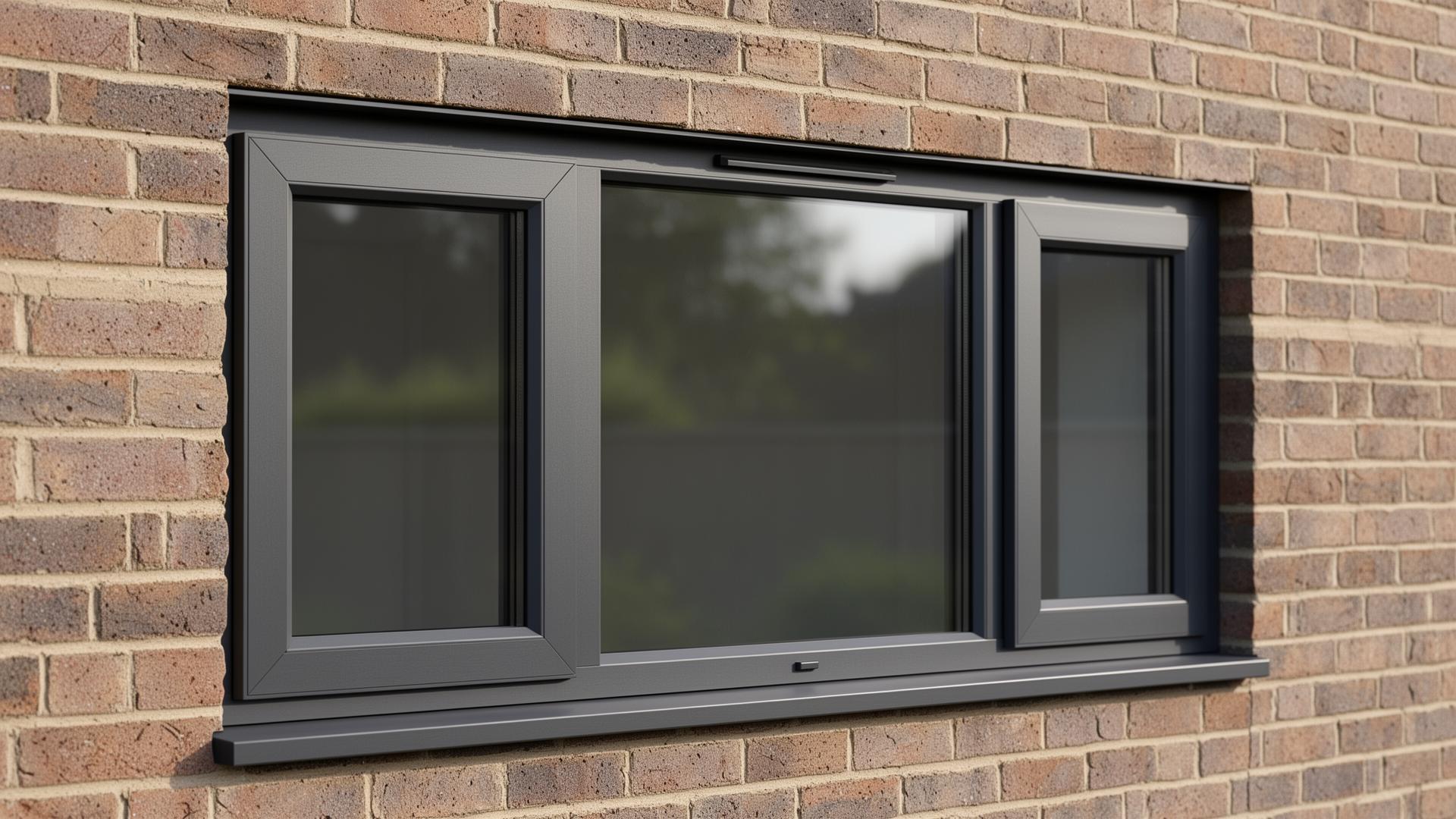
Book a 30-minute visit. We walk every reveal, sample the white, anthracite grey, black, foiled woodgrains against the elevation, and email a written figure inside 24 hours.
Summary — uPVC windows on a coastal seaside home in Barry
A coastal seaside home uPVC windows install in Barry is a walk-and-quote job — no assumptions from the road. 20-year typical lifespan on the frame, with hinges and gaskets serviceable rather than replaceable on this property type. The load path through the bay corner post pulls diagonally when the roof sags; reinforced steel accepts it, aluminium alone deflects. Gravel front gardens mean the crew boards from the van to the elevation to avoid tracking stones inside. Around Barry that usually means salt-laden coastal air corroding cheap aluminium and hinges on seaside Edwardian terraces near the Island, post-war semis in Cadoxton, modern Highlight Park estates, with Barry Island and Cadoxton the streets we are on most. Post-war doors sat on a raised timber threshold; a Part-M part-plate replaces it cleanly at composite door install. Stone cills usually project only 40mm — the frame drip has to clear the projection without over-hanging. Sash cord pulleys behind the timber lining come out clean if the paint layers haven't fused them to the box. Wind-driven rain finds sealant gaps that inland elevations tolerate — bead depth matters more than usual.
Let's make your house feel more like home.
Fill in a few details and we'll come back within 24 hours with a clear quote — no callout fee, no pressure.