

uPVC Windows on an ex-council semi in Cwmbran
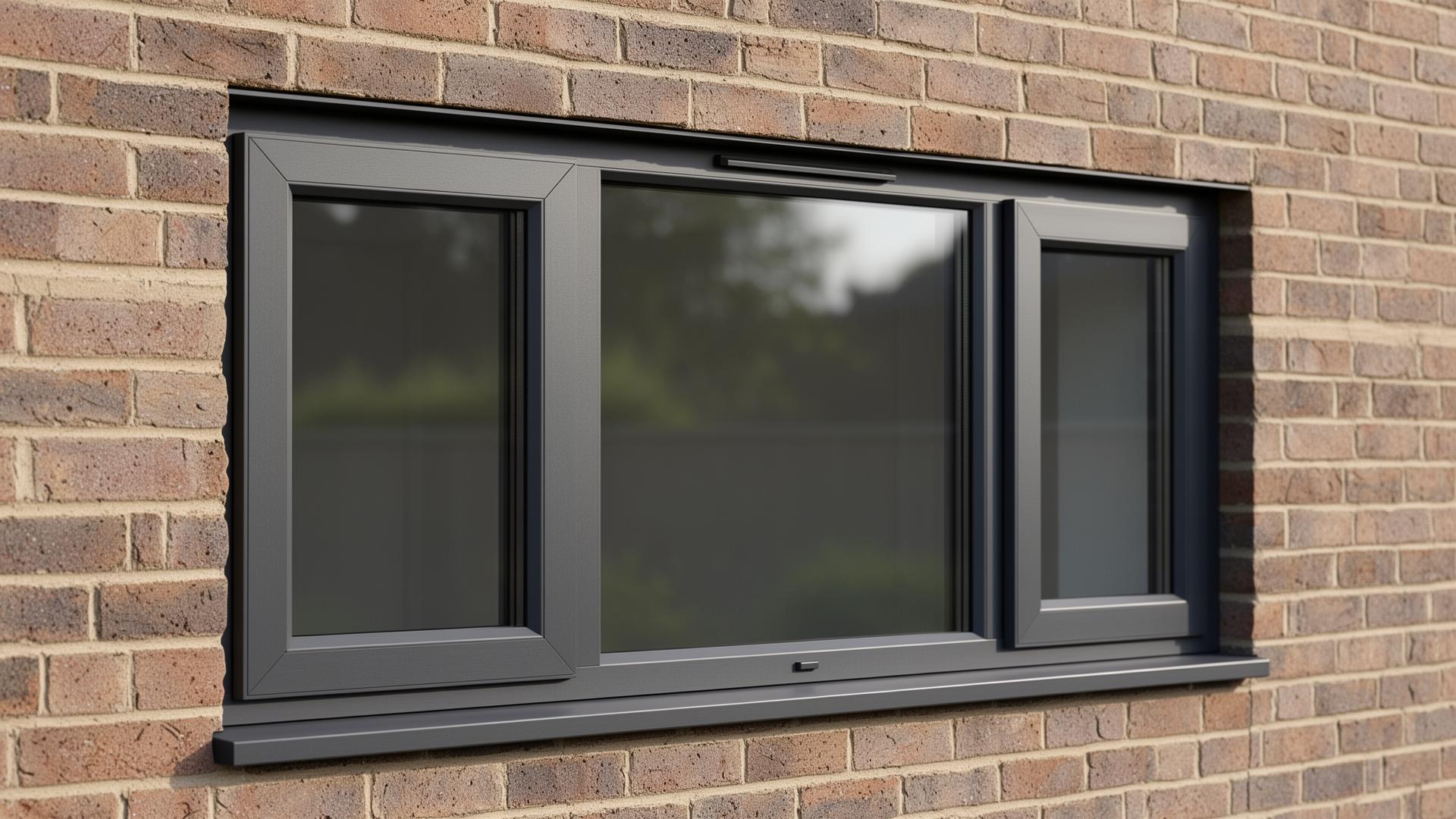
Right-to-buy long-time owners, and second-owner buyers refurbishing the plot for its garden size. That's the mix reaching out for uPVC windows in Cwmbran on this property type — often as part of a wider refresh, sometimes as a like-for-like fix. The square, generous openings take a modern chamfered casement or flush sash equally well. Anthracite foil is the buyer default; white keeps the elevation reading closer to the original. Stained-glass fanlights above the door can be re-set into a modern composite slab if intact, giving continuity across the swap. Stone walls hold thermal mass but radiate cold at the reveal edge; deep frames pull the cold plane further from the room. Roof canopies are usually mono-pitch and shallow — scaffold clearance rarely exceeds 2.1m above the frame head. Off-street parking makes van access straightforward — we can stage glass in the driveway rather than on the pavement. Vaulted internal ceilings mean the crew works off a small tower for gable glazing — ground protection sheeting mandatory. Original front cills are usually blue engineering brick — leave them, drill through them for the frame fixings. External cill drips block with paint over the decades — raking them clean stops water sitting on the frame after install. Original 60s sliding aluminium frames cold-bridge — you can feel a two-degree temperature drop within a foot of the glass in winter. Salt air pits cheap aluminium at the fixing points; genuinely marine-grade powder coating resists.
Common ex-council semis problems we quote uPVC windows for
- 1Render around the frame perimeter is powdery and needs sealing before the new frame lands.
- 2Front door reveal has been enlarged and re-worked over the decades, sometimes badly.
- 3Original Crittall or 70s aluminium replaced with 90s-spec uPVC that's now failing at the gaskets.
Planning & permissions
Ex-council stock is rarely restricted; owners have free reign over colour and style. Many streets end up with a full mix of finishes as owners upgrade individually.
Locally in Cwmbran, Torfaen County Borough Council covers this area. Planned new town — walkable estates, wide roads and a clean grid that makes van access easy. We check any conservation or Article 4 status against the address before quoting rather than after.
Reveal and install detail
- → Square, large openings — the frame options are wider than on period stock.
- → Internal reveals are usually plaster-on-brick, forgiving to swap into.
Method: old frames removed cleanly, new units sat on hardwood packers, expanding foam plus internal trims for a draught-tight seal.
Guarantee: 10-year product guarantee, 2-year fit warranty, lifetime hardware servicing.
Who's asking
Right-to-buy long-time owners, and second-owner buyers refurbishing the plot for its garden size.
In Cwmbran specifically that reads as second-time buyers upgrading original new-town glazing, landlords with rental portfolios, growing families. The recurring driver for a uPVC windows enquiry is: Owners lifting the property from spec-basic to modern spec — often as part of a wider refurb.
Our uPVC windows spec for a ex-council semi
The square, generous openings take a modern chamfered casement or flush sash equally well. Anthracite foil is the buyer default; white keeps the elevation reading closer to the original. In Cwmbran we see this on the new-town 1960s and 70s estates with a mix of semis, town houses and low-rise flats, plus newer Persimmon/Barratt closes on the fringes around Croesyceiliog, Llantarnam, Fairwater, usually paired with original 60s-spec crittall or 90s uPVC failing on new-town semis; traffic noise from the A4051 spine; cold-bridging on the flat-roof extensions common in Croesyceiliog on the same elevation. M4 J25A drops us into Cwmbran in under 20 minutes from base — same-week surveys are standard. Council area is Torfaen County Borough Council in Torfaen; commercial neighbours include Springvale Business Park and Llantarnam Industrial Estate. Nearby: Pontypool 4mi, Newport 5mi, Caerphilly 12mi. Local vibe: planned new town — walkable estates, wide roads and a clean grid that makes van access easy.
What we typically find on survey
- ·The manufacturer's kite mark on the corner of the glass is late-90s vintage, which explains the thermal performance.
- ·The trickle vent on the master bedroom has been foil-taped shut for warmth — condensation has doubled since.
- ·One sash locks by lifting a nail out of the frame — a bodge from a decade ago that everyone forgot about.
- ·The transom bar has a live crack in the plastic, opened up by summer expansion cycles.
- ·The trickle-vent screw covers are missing and the internal chamber has filled with cobweb.
- ·The mid-rail on the composite door is bowed outward at the middle by 2mm — a slab-warp symptom.
- ·The old timber sub-cill under a uPVC swap is boron-treatable but only if we lift the frame off it cleanly.
- ·The frame drainage slots at the bottom are clogged with debris, so rainwater sits inside the chamber.
- ·A previous owner has fitted a chain to the front door on top of the multipoint — a sign they never trusted the lock.
- ·A homemade timber threshold has been screwed to the concrete cill in front of the patio door.
- ·The internal beads pop out with a chisel and a tap, but the external glazing gasket is bonded solidly to the frame.
- ·The bottom rail on the sash has taken years of rain runoff and swollen enough to bind on the frame.
- ·The reinforcement steel inside the top rail of a wide sash has rusted through in one corner.
- ·The gasket at the vent has perished and pulled away from its channel in two-inch sections.
- ·The threshold weather bar is missing its rubber blade — you can see daylight under the door.
- ·Every kitchen window handle has been replaced twice in ten years — a sign the espag is going, not just the handle.
- ·A tenant repair on the bathroom window has used bathroom silicone as the primary bead — it's already gone black.
- ·The internal beadwork has been painted so many times the mitres are unrecognisable.
- ·Condensation runs down the inside of every north-facing pane between October and March.
- ·The top vent has been kept permanently closed with a wooden shim wedged inside the frame.
- ·A previous cylinder swap left the escutcheon plate rotating freely — a snap risk that nobody logged.
- ·The porch-roof lead flashing has been dropping water onto the head of the front door for years.
- ·The door-side glazed sidelight has a shattered internal pane held together by the laminated interlayer.
- ·A weep vent that was factory-drilled has been over-painted three times and no longer clears water from the chamber.
- ·The top hinge on the front door has torn its middle screw out and been left to run on two fixings.
- ·The internal locking cams on the multipoint have been ground down by a mismatched keep pattern.
- ·The stay arm on the top vent has bent and no longer sits into its rest bracket cleanly.
- ·Two units have the classic dust ring inside the sealed gap, meaning the perimeter seal has been breached for at least a year.
- ·The escutcheon on the front door is loose and rotates as the key turns.
- ·Every casement in the property opens with a firm tug on the second click — the friction stays are seized.
Why residents are enquiring right now
- ·The resident has a shift-worker sleeping in the day and needs the bedroom to be a genuine acoustic step change.
- ·The owner is preparing the elevation for a specific street-photo listing and wants the finish to be photographable in raking morning light.
- ·The buyer wants the front door delivered pre-hung and pre-glazed on the same date as the frames.
- ·The resident wants the whole property warm to bare feet on a January morning — the frames are the last variable.
- ·The resident has been quoted for solar and does not want the roof work to happen before the windows do.
- ·The homeowner wants the crew to catch anything the vendor's survey missed while they're on site.
- ·The owner wants the crew to talk to the neighbour before scaffold goes up on a shared party wall.
- ·The resident wants the crew to remove and re-hang the internal curtains as part of the job, not leave that step to them.
- ·The buyer is furnishing the property for short-term let and wants a five-year cosmetic warranty on the door slab.
- ·The resident wants the sliding door to open with a fingertip after ten years of use, not two hands after two.
- ·The buyer wants a full set of the same colour across every elevation, not the current mixed collection.
- ·The homeowner has quotes from two national companies and wants a local one to be honest about the same job.
- ·The homeowner is expecting a Grandchild to stay for extended visits and wants the guest room genuinely warm overnight.
- ·The owner is done with the biannual repaint of the timber back door and wants a paint-free equivalent.
- ·The homeowner has quotes for a new kitchen next spring and wants the patio doors in before those trades arrive.
- ·The homeowner is 68 and wants a threshold that will still be usable in ten years without a step.
- ·The buyer wants the heating bill visibly lower before next winter, not a marginal improvement they have to guess at.
- ·The owner has an electric car on the drive and wants the front to say the whole property has been kept up.
- ·The buyer wants the property to look owned rather than tenanted — the front door tells that story first.
- ·The resident is done with condensation-driven mould at the sill line every February.
- ·The homeowner is on a smart meter and can see the room-by-room heat loss on a phone app.
- ·The current front door leaks visibly around the letterplate every time the wind swings east.
- ·The resident wants the noise of the school run down and the light from the morning sun up.
- ·The owner just remortgaged and wants the money to be visible on the elevation for the next valuation.
- ·The resident is moving elderly parents in downstairs and needs the front threshold to be wheelchair-usable.
- ·The homeowner wants a warranty they can pass on to the next owner without a fee or a form.
- ·The homeowner wants a single date, a single crew, and a single guarantee — not a paper trail across three companies.
- ·The homeowner is on holiday half the year and wants a security spec they can leave for weeks without worrying.
- ·The wife wants the noise from the trunk road down; the husband wants the heating bill down; both are on the enquiry.
- ·The resident is a keen gardener and wants a patio door that opens as fully as possible into the garden.
How we actually fit it
- ·The frame drainage caps face outward and are set proud enough that they don't clog with a season of rainwater.
- ·The old keys are collected and destroyed, not left in a bag on the drive.
- ·The bead-in tools are rubber-faced, not steel — a steel tool marks the profile within minutes.
- ·The gasket at the corner mitre is butt-jointed with a fresh knife cut, not stretched and hoped.
- ·The dustsheet inside the room is a heavy canvas taped to the skirting, not a light plastic left loose.
- ·The old frame is removed by cutting the corners with a reciprocating saw rather than a lever bar that damages the reveal.
- ·The threshold has an EPDM strip continuous under the frame — not stitched together across the door width.
- ·The multipoint gearbox is thrown by hand before the frame goes in — a factory fault at that point is a five-minute fix.
- ·The frame perimeter sealant is a low-modulus polymer where the substrate is going to move — plain silicone otherwise.
- ·The wall around the frame is Hoovered before the client sees the room again — brick dust ages a first impression.
- ·The frame is plumbed on two axes before the first fixing goes in — not one axis and then trusted.
- ·The lock cylinder is measured to sit flush with the escutcheon plate — a proud cylinder is a snap risk.
- ·The new frame is stood in the reveal dry before any fixings go in — a final chance to catch a wrong-hand delivery.
- ·The fitting van is stocked with the specific spare parts likely to be needed on the day — not a return trip on a missing hinge.
- ·The letterplate cowl is checked to swing free without touching the door face — a rubbing cowl marks the paint within weeks.
- ·Fixings are set at the manufacturer's spacing, not evenly spaced by eye — the corner loads matter.
- ·The internal cill is scribed to the reveal, not just butted and caulked over the gap.
- ·Sealant is a single continuous bead run at the perimeter, not overlapped in six-inch runs.
- ·Fixings are always at the reinforcement points — a screw through the chamber alone loosens within a year.
- ·The multipoint hooks are lubed with the manufacturer's grease, not household oil that dries and gums.
- ·The bay-corner post gets a structural bracket into masonry, not a token fixing into the outer frame.
- ·The door is closed, locked, and left overnight before final adjustment, so any settlement is captured before sign-off.
- ·The internal cill support is packed with hardwood the full depth of the cill, not just at the ends.
- ·We de-glaze into a padded rack, not straight into the skip — the intact panes go to a glazier for reuse.
- ·The window board is scribed to the plaster line, not left with a caulked gap that shows in raking light.
- ·The bay assembly is squared with a laser diagonal, not a tape measure and eye.
- ·The old debris leaves in a single tidy load — not skip visits three days apart.
- ·Every silicone bead is tooled with the correct radius spatula, not smoothed with a wet finger only.
- ·The client's paint colour is sampled at the survey visit and matched at the office before the fitters arrive on install day.
- ·The multipoint hooks are lightly greased after fitting, before the door is closed for the first time.
Owner occupiers replacing one door or one window
Written for owner occupiers replacing one door or one window
This page is for the single replacement, not the whole property. One failed unit, one tired front door, one window that never closed properly since the last fitter left. The job is small, so the things that matter are turning up when promised and leaving the reveal tidy.
What this buyer actually needs from us
- A fixed price for one opening with no minimum order pressure
- A straight answer on whether the existing frame can be repaired instead
- The bay assembly is squared with a laser diagonal, not a tape measure and eye.
- The multipoint hooks are lubed with the manufacturer's grease, not household oil that dries and gums.
Reviews from customers who booked one door or one window and were not upsold
Get one opening priced in Cwmbran
No minimum order and no pressure to do the rest of the house. A fixed written price for the single unit you need. UPVC windows for ex-council semis properties in Cwmbran, single window in 90 minutes, full-house in 1–3 days, with a written price inside 24 hours.
Questions we get on ex-council semis jobs like this
What difference will we actually notice afterwards?+
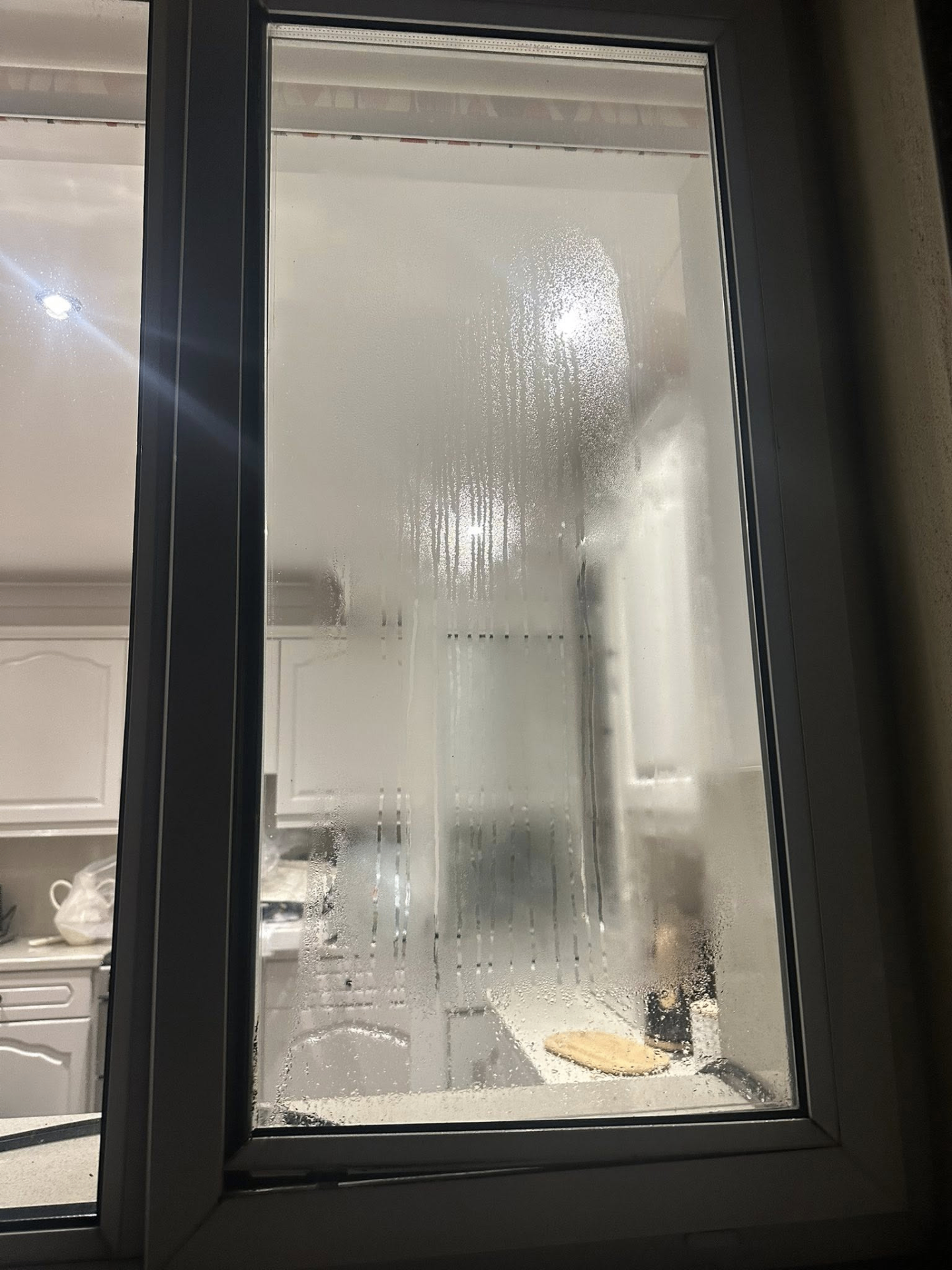
Misted units, condensation pooling on cills, cold-draught complaints and EPC ratings dragging properties below E. On a ex-council semis the first thing owners tend to report is that the room holds heat into the evening instead of dropping as soon as the heating goes off, followed by the drop in road noise. 20-year typical lifespan on the frame, with hinges and gaskets serviceable rather than replaceable.
Do you handle the old frames and glass?+
Removal, disposal and recycling are all in the quoted figure. Sealed units go to a glass processor, uPVC to a profile recycler, and the skip or van load never sits on a Cwmbran street overnight.
Do uPVC windows suit a ex-council semis?+
Yes, with the right profile. On an ex-council semi means the reveal and sightlines drive the specification more than the price list does, and around Cwmbran we allow for original 60s-spec crittall or 90s uPVC failing on new-town semis when we choose the frame and the seal.
Do you fit uPVC windows on ex-council semis around Cwmbran?+
Regularly. Croesyceiliog, NP44 is where most of this work lands, and we also cover Pontypool, Newport, Caerphilly. M4 J25A drops us into Cwmbran in under 20 minutes from base — same-week surveys are standard.
Do you take on single window or single door jobs?+
Yes, and there is no minimum order. A single opening is usually a half day, including removing the old frame and making the reveal good inside and out.
Is it cheaper to repair the existing frame?+
Often, yes. Hinges, handles, gearboxes and single sealed units can all be replaced without touching the frame. We quote the repair first when the frame itself is sound.
Free uPVC windows survey — ex-council semi, Cwmbran
Book a 30-minute visit. We walk every reveal, sample the white, anthracite grey, black, foiled woodgrains against the elevation, and email a written figure inside 24 hours.
Summary — uPVC windows on a ex-council semi in Cwmbran
Next step for a ex-council semi uPVC windows figure in Cwmbran is a 30-minute survey — we walk every opening, check the reveal detail, and write pricing the same day. Original front cills are usually blue engineering brick — leave them, drill through them for the frame fixings. External cill drips block with paint over the decades — raking them clean stops water sitting on the frame after install. Around Cwmbran that usually means original 60s-spec crittall or 90s uPVC failing on new-town semis on new-town 1960s and 70s estates with a mix of semis, town houses and low-rise flats, plus newer Persimmon/Barratt closes on the fringes, with Croesyceiliog and Llantarnam the streets we are on most. Front door threshold sits on a York stone step in most cases — level it back to the tile line before the frame lands. Non-square reveals mean every frame is bespoke-scribed — templates rather than standard sizes. Timber-frame construction means fixings go into studs; we probe before drilling to locate them. Party wall proximity means neighbours hear the removal — we knock ahead and time the noisy hour to mid-morning.
Let's make your house feel more like home.
Fill in a few details and we'll come back within 24 hours with a clear quote — no callout fee, no pressure.