
Post-war-property composite doors in Pontypridd
Right-to-buy long-time owners, and second-owner buyers refurbishing the plot for its garden size. That's the mix reaching out for composite doors in Pontypridd on this property type — often as part of a wider refresh, sometimes as a like-for-like fix. A composite in Anthracite, Black or Slate lifts the front elevation without needing a canopy or porch. We often add a matching sidelight where the original door had a side pane. Grass verges take skip weight fine when boarded — check with the council before dropping directly onto turf. Original developer composite slabs often warp under southern sun; a replacement 48mm slab with GRP skin resists. Foil colour on the front elevation reads sympathetic when it lifts a warm undertone from the brick — pure white can look stark. Original patio door tracks sit direct on the floor slab — we lift, level and re-set on stainless packers. Salt spray in high winds reaches inland elevations at coastal properties — we spec stainless furniture on rear frames too. Tile porches are laid on a lime bed that reacts poorly to modern silicone; we mask and use low-modulus polymer instead. Rear outshut kitchens often have flat felt roofs at 2.1m — glass and frame heights are set to clear the eaves. Stone reveals need resin anchors, not plug-and-screw — dressed stone crumbles under mechanical fixings. Door head heights sometimes below 1.9m; a standard 1981mm slab needs trimming or a bespoke height ordering.
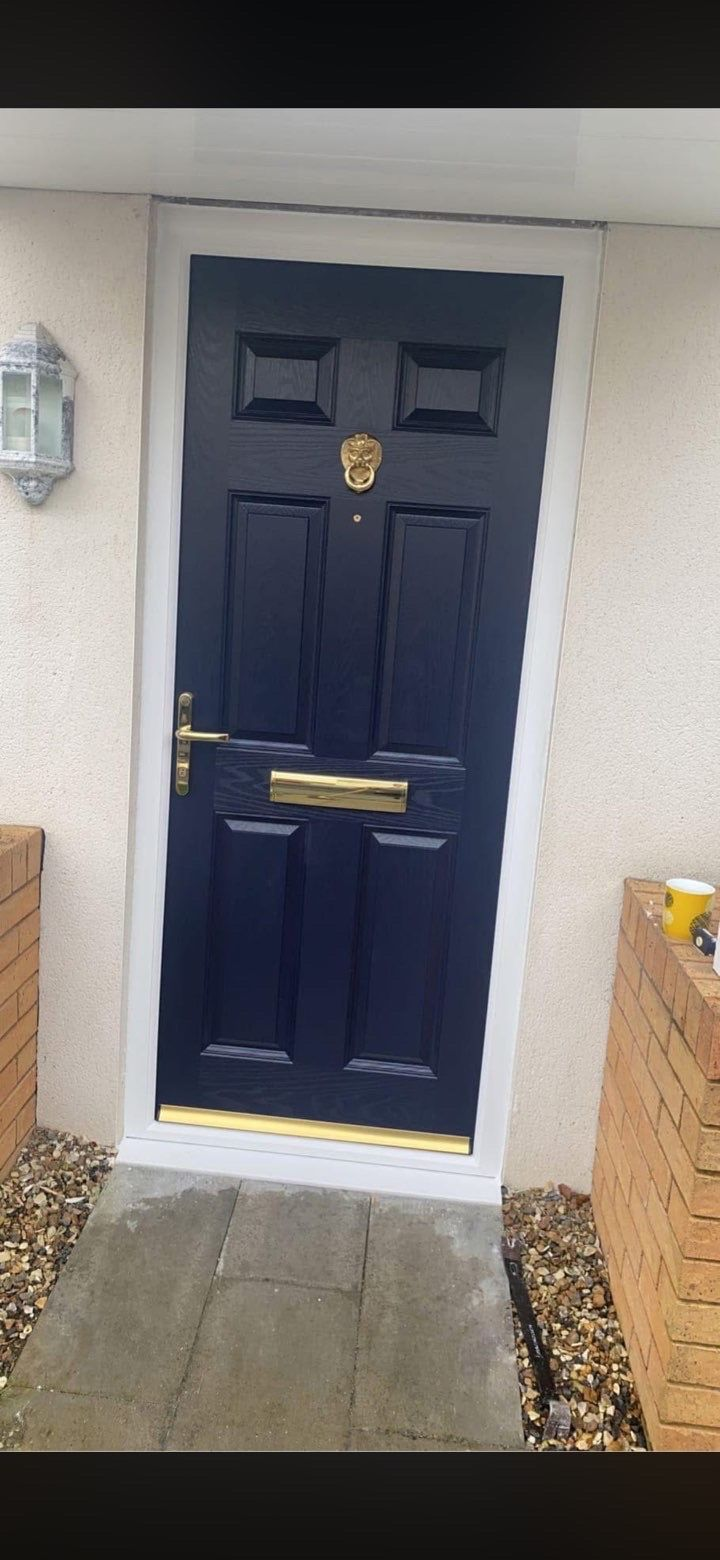
Common ex-council semis problems we quote composite doors for
- 1Original Crittall or 70s aluminium replaced with 90s-spec uPVC that's now failing at the gaskets.
- 2Render around the frame perimeter is powdery and needs sealing before the new frame lands.
- 3Front door reveal has been enlarged and re-worked over the decades, sometimes badly.
Local context — Pontypridd
- Council
- Rhondda Cynon Taf
- Postcodes
- CF37, CF38
- Main route
- A470
- Nearest town
- Caerphilly (10 mi)
Neighbourhoods we cover: Tonteg, Glyncoch, Graig, Coedpenmaen, Hawthorn, Beddau. Direct down the A470 from our Caerphilly base — most quotes happen the same week.
Who's asking
Right-to-buy long-time owners, and second-owner buyers refurbishing the plot for its garden size.
In Pontypridd specifically that reads as landlords with student lets near USW, owner-occupiers replacing draughty original sashes. The recurring driver for a composite doors enquiry is: Owners lifting the property from spec-basic to modern spec — often as part of a wider refurb.
What makes a ex-council semi its own thing
- generous garden front and back — often the largest plots on the street
- large square window openings, originally metal-frame Crittall or timber casement
- solid front door with an off-centre small window or side pane
- hipped concrete-tile roof
Reveal and install detail
- → Internal reveals are usually plaster-on-brick, forgiving to swap into.
- → External cills are usually concrete — sound and stable, drip clean-out is standard.
Method: old frame stripped on the day, new outer frame fitted plumb to the brick reveal, threshold sealed with EPDM and silicone.
Guarantee: 10-year product guarantee with a 2-year fitting guarantee on top.
What we typically find on survey
- ·The old aluminium sliding door has grit in the track that has worn the roller wheels to elliptical.
- ·A previous cylinder swap left the escutcheon plate rotating freely — a snap risk that nobody logged.
- ·The top vent has been kept permanently closed with a wooden shim wedged inside the frame.
- ·Original beads have been over-painted so many times they no longer clip flush and rattle in a gust.
- ·The friction hinge on a bedroom window has one detent — it either opens fully or slams shut on any breeze.
- ·The bathroom obscure glass pattern has been discontinued for over a decade — matching a single pane is not possible.
- ·The cill drainage caps on a north-facing elevation are frozen in place with layered moss.
- ·The internal beadwork has been painted so many times the mitres are unrecognisable.
- ·The trickle vent on the master bedroom has been foil-taped shut for warmth — condensation has doubled since.
- ·The front door has been painted three times without stripping — the paint film is now stopping the door closing at the top.
- ·The internal reveal plaster is spalling under the cill where condensation has run for years.
- ·There is a paint bridge from the internal architrave to the frame that will crack the moment the new unit lifts out.
- ·The old timber sub-cill under a uPVC swap is boron-treatable but only if we lift the frame off it cleanly.
- ·The outer frame has moved fractionally over the years, dropping the bottom hinge screw pattern out of line.
- ·One kitchen unit has a defrost trace across the low-e coating — the argon fill has been gone a while.
- ·The composite door slab has a hairline crack along the letterplate cut-out from a delivery boot.
- ·The friction stays are the wrong hand for the sash — a previous swap fitted left-hand stays on a right-hand window.
- ·Original security stickers from the installer are still on the bottom of the panes, twenty years later.
- ·The trickle vents are painted shut and the room fugs up within an hour of the kettle going on.
- ·The threshold weather bar is missing its rubber blade — you can see daylight under the door.
- ·The porch canopy has been leaking directly onto the top of the door for years — the top edge of the slab is soft.
- ·The frame colour has gone chalky on the sun side and stayed factory white on the shaded elevation.
- ·A previous decorator's dust sheet was left inside the frame chamber during a repaint and is still there.
- ·The window boards inside are chipboard, swollen at the edges from years of trickle condensation.
- ·The glazing spacers between panes carry the visible desiccant snowfall that gives away a blown unit.
- ·The door-side glazed sidelight has a shattered internal pane held together by the laminated interlayer.
- ·The bottom rail on the sash has taken years of rain runoff and swollen enough to bind on the frame.
- ·The old timber back door has a live rot pocket at the bottom hinge that reads soft to a screwdriver tip.
- ·The frame reinforcement steel inside the outer frame has begun to rust and stain the internal white finish.
- ·A previous owner has fitted a chain to the front door on top of the multipoint — a sign they never trusted the lock.
Why residents are enquiring right now
- ·The owner has an ageing parent visiting for extended stays and wants the guest bedroom warmer than it currently is.
- ·The owner is done paying to service failing 90s uPVC every couple of years and wants the whole set replaced together.
- ·The owner has watched a neighbour's crew leave debris behind and wants a written cleanup expectation on the quote.
- ·The resident wants the patio door to slide with one finger — not the two-handed heave the current one takes.
- ·The resident works from home and wants the neighbour's dog to stop being the loudest thing on every call.
- ·The buyer wants the property to be quieter after 11pm — the street noise is fine, the bass from next door is not.
- ·The owner is done with the sliding door drag and wants one that closes with a single push.
- ·The resident is expecting an elderly parent to move in and needs a door that opens without a shove.
- ·The customer wants a specific hardware colour to match a kitchen renovation booked six months out.
- ·The owner just remortgaged and wants the money to be visible on the elevation for the next valuation.
- ·The buyer wants the frames branded with the manufacturer's paperwork stapled to the frame chamber for the next owner.
- ·The homeowner has an infrared thermometer and has been point-checking the frames — they want the readings up by ten degrees.
- ·The homeowner has just re-rendered the front elevation and wants the frames to be the last piece of the picture.
- ·The resident is fitting a home cinema in the front room and needs the windows to be a full acoustic upgrade, not a nominal one.
- ·The owner is having a kitchen refit next month and wants the patio door in first so the tiler works to a fitted threshold.
- ·The buyer wants the property to look owned rather than tenanted — the front door tells that story first.
- ·The resident wants the front to look distinct on a street of five identical houses.
- ·The owner has scaffolding booked for a re-render and wants the frames sequenced around the render trades.
- ·There is a puppy in training and the sliding door onto the garden has to work with a paw against the glass.
- ·The resident wants the crew to remove and re-hang the internal curtains as part of the job, not leave that step to them.
- ·The buyer wants an installer who will still exist to honour a guarantee in year eight.
- ·A newborn has arrived and the parents want the nursery to hold a stable overnight temperature.
- ·The homeowner is planning a garden studio and wants the patio doors to bookend the view when it's finished.
- ·The owner wants the property to look ten years newer without needing an extension.
- ·There is a downstairs shower being fitted and the bathroom window needs to be swappable before the tiler starts.
- ·The homeowner has finally accepted the timber back door is beyond another repaint and wants the like-for-like replacement design chosen with them.
- ·A recent break-in on the street has moved security up the priority list ahead of aesthetics.
- ·The resident wants the front door lock to be re-keyable if a set of keys goes missing in year three.
- ·The homeowner is done with the whistle the front door letterplate makes in a north wind.
- ·The resident has a shift-worker sleeping in the day and needs the bedroom to be a genuine acoustic step change.
How we actually fit it
- ·The client's paint colour is sampled at the survey visit and matched at the office before the fitters arrive on install day.
- ·The frame square is checked at the diagonals before any glass goes in — a square frame stays square.
- ·The head of the frame is packed dry before the sides are fixed, so the frame does not distort during installation.
- ·The keys are handed to the client only after the lock has been thrown four times in and out from both sides.
- ·The gasket is dressed into every corner with a specific gasket tool, not a screwdriver, so the corner stays sharp.
- ·The internal make-good uses caulk to the plaster, silicone to the tiles, and neither where paint has to go over.
- ·Ground protection sheet goes down before the old frame comes out — not after the mess starts.
- ·The friction stay on a new casement is set to the client's preferred restraint at handover — 45°, 90°, or fully open.
- ·The trickle vent chamber inside the frame is proven clear with a torch before the outer cap goes on.
- ·The new frame is stood in the reveal dry before any fixings go in — a final chance to catch a wrong-hand delivery.
- ·The install team pull the fridge out for kitchen-window swaps only after checking the flooring can take the drag scuff.
- ·The multipoint hooks are lubed with the manufacturer's grease, not household oil that dries and gums.
- ·The frame is protected with a low-tack film across any face a tool might touch during the fitting hour.
- ·The frame is protected with a low-tack tape at any point a tool might scrape it during the fitting hour.
- ·The old timber cill under a uPVC swap is treated with a boron preservative before the new frame is set over it.
- ·The trickle-vent covers are set with their vane orientation matched across a bank of windows for visual consistency.
- ·The perimeter airtight tape is applied over the frame flange in a single unbroken run around all four sides.
- ·The frame reinforcing steel is confirmed inside the top rail before the transom fixing is chosen.
- ·The multipoint gearbox is thrown by hand before the frame goes in — a factory fault at that point is a five-minute fix.
- ·The bay-corner post is set with a laser level across both faces before the outer frames are trimmed to fit.
- ·The letterplate is fitted with the internal flap set to close under its own weight without dragging.
- ·The internal beads are numbered on removal so they return to the same corner they came from.
- ·The client's paint colour on the internal reveal is patched with matching paint the crew brings, not left for someone else.
- ·The finished elevation is photographed from the pavement and uploaded to the office job file as sign-off record.
- ·The lock cylinder is measured to sit flush with the escutcheon plate — a proud cylinder is a snap risk.
- ·Trickle vents are drilled through the outer frame with a bespoke jig — not freehand with a spade bit.
- ·The mitre joins on any Georgian bar are picked to face the corner that is least visible from indoors.
- ·We de-glaze into a padded rack, not straight into the skip — the intact panes go to a glazier for reuse.
- ·The old debris leaves in a single tidy load — not skip visits three days apart.
- ·The keeps for the multipoint are set with the door open and the position marked, not adjusted by eye once the door is closed.
Landlords, letting agents and portfolio owners
Why composite doors look different to landlords, letting agents and portfolio owners
This page is aimed at rental stock rather than owner occupied homes. The priorities are different: void periods, compliance, hardware that survives tenants, and a spend that can be justified against rent and EPC banding.
Where this job stands or falls
- Hardware specified for heavy use rather than the cheapest available
- Documentation for the file: guarantee, insurance and compliance certificates
- The old handles are offered to the client before being binned — sometimes a chrome D-handle finds a shed door life.
- Ground protection sheet goes down before the old frame comes out — not after the mess starts.
Repeat work for local landlords across multiple properties, with the same specification carried between them
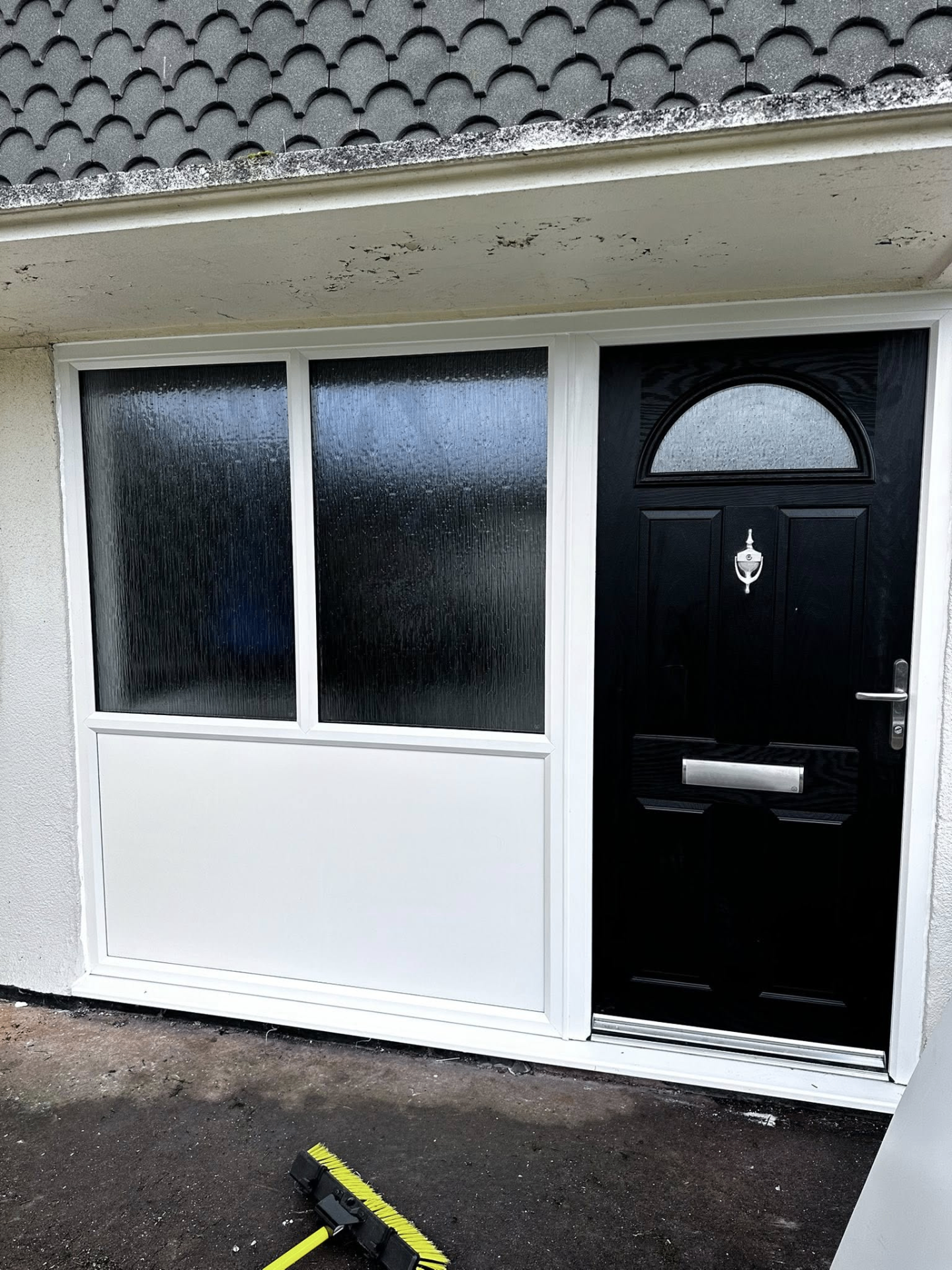
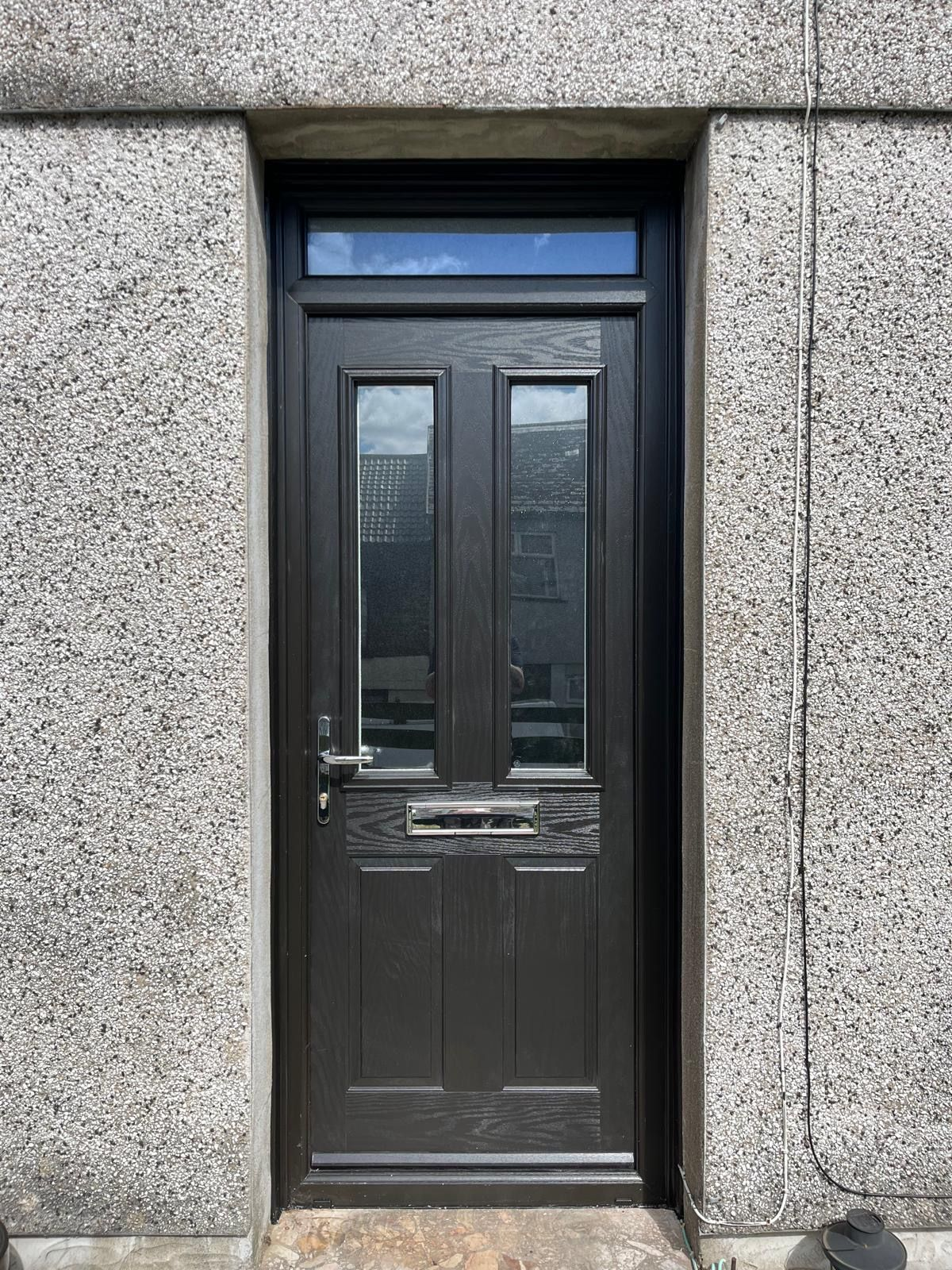
Quote for a rental property in Pontypridd
Send the address and the void dates. We will survey, price every opening and confirm whether the work fits the window before the next tenancy starts. Composite doors for ex-council semis properties in Pontypridd, fitted in a single day, usually 4–6 hours, with a written price inside 24 hours.
Questions we get on ex-council semis jobs like this
Will planning rules affect composite doors on this kind of property?+
Ex-council stock is rarely restricted; owners have free reign over colour and style. Many streets end up with a full mix of finishes as owners upgrade individually. We check the position with Rhondda Cynon Taf County Borough Council before anything is ordered so there is no surprise after manufacture.
What guarantee comes with composite doors here?+
10-year product guarantee with a 2-year fitting guarantee on top, and it applies the same whether the property is a ex-council semis in Pontypridd or anything else on our books. Insurance and paperwork are supplied with the completed job.
How much disruption should we expect inside?+
Dust sheets down, one room at a time, and the old units carried out through the nearest external door rather than through the house where we can. On a ex-council semis the internal plaster reveal is the sensitive part, so we cut the old frame out rather than lever it. Fitted in a single day, usually 4–6 hours.
Do you fit composite doors on ex-council semis around Pontypridd?+
Regularly. Treforest, CF37 is where most of this work lands, and we also cover Caerphilly, Cardiff, Treorchy. Direct down the A470 from our Caerphilly base — most quotes happen the same week.
Can the work be done between tenancies?+
That is how most of our rental work runs. Give us the void dates at enquiry and we will confirm before you accept whether the programme fits inside them.
Will new windows move the EPC band?+
Replacing failed or single glazed units with A rated sealed units improves the fabric score. How far the band moves depends on heating, insulation and the rest of the assessment, so we will not promise a specific letter.
Free composite doors survey — ex-council semi, Pontypridd
Book a 30-minute visit. We walk every reveal, sample the Solidor / Rockdoor style ranges against the elevation, and email a written figure inside 24 hours.
Summary — composite doors on a ex-council semi in Pontypridd
Ex-council semi jobs in Pontypridd get a named contact from survey to snag. 10-year product guarantee with a 2-year fitting guarantee on top sits behind it. Vaulted internal ceilings mean the crew works off a small tower for gable glazing — ground protection sheeting mandatory. Off-street parking makes van access straightforward — we can stage glass in the driveway rather than on the pavement. Around Pontypridd that usually means damp from the river valley and frequent rain on long rows of valley terraces with stone fronts, plus 1960s-onward semis along the river belt, with Treforest and Graig the streets we are on most. Salt air pits cheap aluminium at the fixing points; genuinely marine-grade powder coating resists. Original 60s sliding aluminium frames cold-bridge — you can feel a two-degree temperature drop within a foot of the glass in winter. Single-skin wall means the frame carries no thermal break at the perimeter — sealant bead depth matters more than usual. Frame colour on the front elevation is often deed-restricted to white, cream or a heritage green in conservation areas.
Let's make your house feel more like home.
Fill in a few details and we'll come back within 24 hours with a clear quote — no callout fee, no pressure.